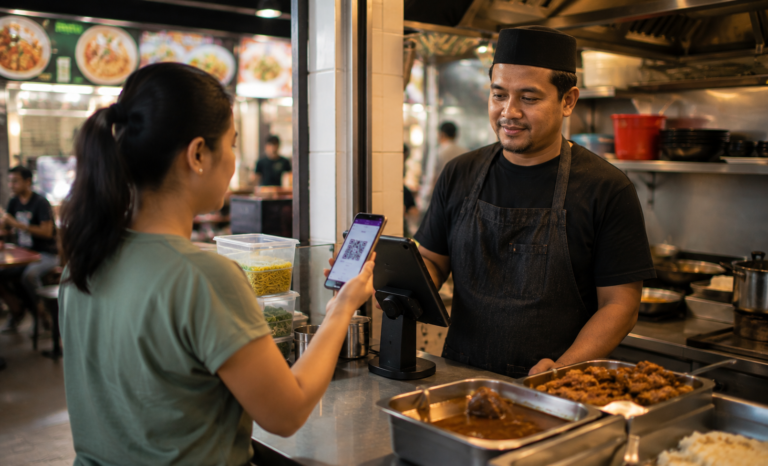



A pharmacist is preparing a prescription while another staff member helps customers looking for vitamins, cough medicine, and skincare products. A customer at the counter asks whether a Pharmacy Only (P) medicine is still available, and another is ready to pay using PayNow. Every minute counts, and every transaction influences inventory.
This balancing act is part of everyday pharmacy operations. Prescription dispensing, retail sales, inventory updates, payment processing, and reporting happen throughout the same business day. Each activity supports the next, creating a workflow that keeps the pharmacy running smoothly.
That is why many pharmacy owners are investing in a pharmacy POS Singapore businesses can rely on. A modern POS connects inventory, sales, reporting, and payment processing into one system, allowing staff to work with accurate information throughout the day.
Editors Pick
- What is a POS system? A complete guide for SMEs
- How Does a POS System Work? A Step-by-Step Guide
- How to Choose a POS System
- How to Read POS Report
Running a pharmacy means managing two things at once, all day
A pharmacy serves two important functions under one roof. It supports healthcare by dispensing prescription medicines while operating as a retail business that sells over-the-counter medications, wellness products, supplements, and personal care essentials.
Throughout the day, pharmacists and retail staff move between reviewing prescriptions, serving walk-in customers, checking inventory, receiving supplier deliveries, and completing transactions at the cashier. It is a little like conducting an orchestra where every section has its own tempo, yet the performance stays in sync.
Singapore pharmacies also operate within a regulated environment. The Health Sciences Authority (HSA) classifies medicines into categories such as Prescription Only Medicines (POM) and Pharmacy Only (P) medicines, each with different dispensing requirements. While the POS does not replace professional judgement or regulatory processes, accurate transaction and inventory records help support day-to-day operational consistency alongside these requirements.
A pharmacy POS system Singapore businesses use today brings these activities together. Sales, stock movement, payment collection, and reporting remain connected throughout the day, giving managers greater confidence in the information they rely on to make operational decisions.
What does a POS do for a pharmacy beyond processing payment?
A pharmacy POS is much more than a payment terminal. It acts as the operational centre of the pharmacy by connecting inventory, transaction records, reporting, and payment processing within one platform.
Every completed sale automatically records valuable business information. Managers can review which products are selling well, monitor inventory movement, understand customer purchasing patterns, and prepare daily reports using information collected throughout the day.
| Pharmacy Activity | How a POS Supports It |
|---|---|
| Medication sales | Records transactions automatically |
| Prescription transactions | Tracks sales alongside retail purchases |
| Stock management | Updates inventory after each sale |
| Reporting | Generates daily and periodic reports |
| Payment processing | Accepts multiple payment methods |
| Multi-branch operations | Centralises visibility across outlets |
For pharmacies carrying hundreds or even thousands of SKUs, a pharmacy stock management POS helps organise products into logical categories such as prescription medicines, supplements, medical devices, personal care products, and wellness essentials. Product information stays structured and easier to manage as inventory grows.
The same system can also record prescription-related transactions alongside everyday retail purchases. Managers gain a more complete picture of daily operations, making it easier to review sales trends, inventory movement, and overall business performance from one platform.
How does a pharmacy POS keep medication stock accurate?
A pharmacy depends on accurate inventory records to support timely customer service and informed purchasing decisions. When inventory reflects actual stock on the shelf, staff can respond confidently to customer enquiries and plan replenishment more effectively.
Every completed transaction updates inventory automatically. Whether the purchase involves prescription medicines, over-the-counter products, supplements, or healthcare accessories, the available stock adjusts immediately within the system.
Staff can access current stock information in real time while serving customers at the counter. This makes it easier to confirm whether an item is available before checking the dispensary shelves or preparing the next supplier order.
Historical sales records also provide valuable insights for purchasing decisions. Managers can review product movement across different periods of the year to understand seasonal demand. For example, cough and cold remedies may experience stronger demand during periods of increased respiratory illness, while allergy medications may follow different purchasing patterns.
This information supports smarter inventory planning by helping pharmacies:
- Maintain appropriate stock levels for frequently purchased medications.
- Identify products that move consistently throughout the year.
- Plan replenishment using actual sales history.
- Allocate inventory more effectively across different outlets.
These insights become increasingly valuable as product ranges expand and customer demand changes over time.
Handling the counter during peak hours
Peak periods often bring together several customer journeys at once. One customer is collecting a prescription, another is purchasing children’s vitamins, and someone else is selecting skincare products before paying with a digital wallet. Staff move quickly between professional consultation and retail service while maintaining accurate transaction records.
A retail pharmacy POS SG businesses use should support every stage of that customer experience through one connected workflow. Prescription transactions and retail purchases can be recorded within the same system, allowing inventory and sales records to stay aligned throughout the day.
Payment flexibility is equally important for Singapore pharmacies. Many customers expect the freedom to choose their preferred payment method, whether they are purchasing everyday healthcare products or collecting prescribed medication.
Common payment methods include:
- Cash
- Credit and debit cards
- PayNow
- SGQR-supported digital payments
Labamu’s POS Cashier is one example of a solution that supports PayNow, SGQR, card payments, and automatic inventory updates within the same transaction workflow.
Supporting multiple payment methods through one POS also simplifies transaction recording, making it easier to review payment summaries at the end of the day while delivering a smooth customer experience during busy trading hours.
How does end-of-day reconciliation work with a POS?
Daily reconciliation gives pharmacy owners a clear picture of the day’s performance before the shutters come down. A connected POS automatically compiles sales, payment records, and transaction summaries into one report, making it easier to review business activity and prepare financial records.
Closing time in a pharmacy involves more than counting the cash drawer. Managers also review digital payments, confirm transaction totals, and ensure sales records match business activity throughout the day.
A pharmacy POS automatically generates a structured transaction summary that can include:
- Total daily sales
- Number of transactions
- Sales by product category
- Payment method breakdown
- Top-selling products
- Staff or outlet performance, depending on system configuration
Because payment methods such as cash, PayNow, card payments, and SGQR transactions are recorded within the same system, managers can review each payment channel from a single dashboard.
Accurate daily records also support broader financial responsibilities. According to the Inland Revenue Authority of Singapore (IRAS), businesses generally need to register for GST once taxable turnover exceeds S$1 million. Well-organised transaction records make financial reporting more straightforward and provide reliable documentation for business operations.
Daily reconciliation also provides valuable operational insight. Managers can identify busy trading periods, compare sales across weekdays, and understand which product categories contribute most to revenue. These insights help shape purchasing decisions and staffing plans over time.
Managing multiple pharmacy branches from one system
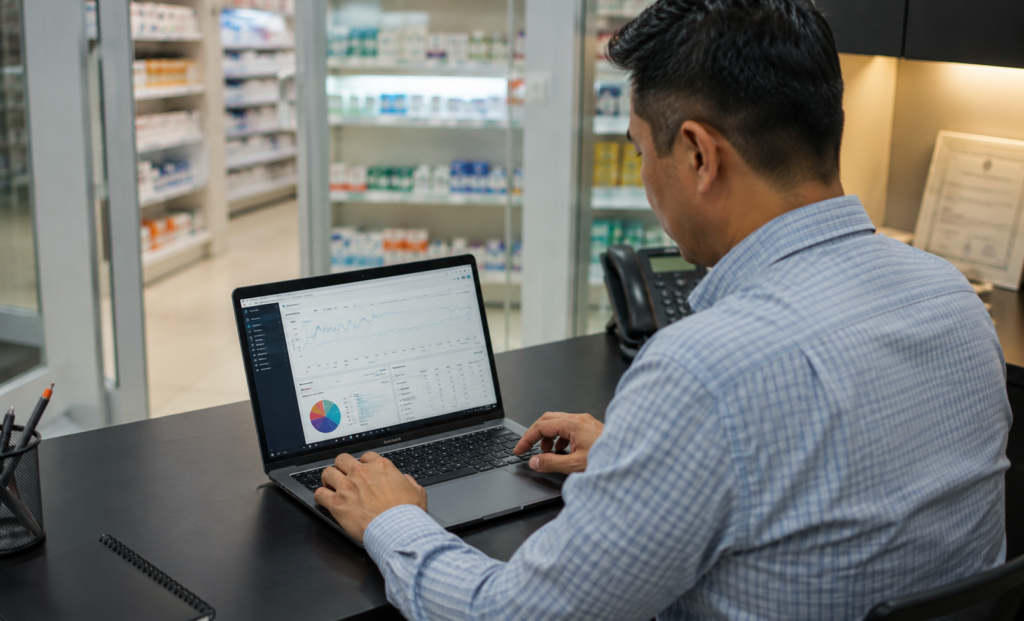
For pharmacy operators with more than one outlet, a connected POS creates central visibility across the business. Managers can monitor stock levels, compare branch performance, and maintain consistent product information from one login, making day-to-day management more efficient as the business expands.
Growth often begins with a second location. As more branches open, managers need a consistent view of inventory, pricing, and sales performance across every outlet.
A multi-branch pharmacy POS provides that visibility through one connected platform.
Managers can review:
- Current stock levels at each branch
- Daily and monthly sales performance
- Product availability across outlets
- Branch-specific reports
- Staff performance, where supported
- Pricing and product catalogue updates
For example, one branch may sell more family healthcare products, while another sees stronger demand for supplements or personal care items. Sales reports help managers understand these local buying patterns and distribute inventory accordingly.
Centralised product management also keeps pricing and product information consistent throughout the business. When updates are made, every outlet works from the same catalogue, creating a more unified customer experience.
Business performance can also be compared across locations through consolidated dashboards, helping owners identify trends and make informed operational decisions as the pharmacy network grows.
Running your pharmacy with a more connected system
Modern pharmacies are expected to deliver accurate dispensing, responsive customer service, efficient inventory management, and reliable reporting every day. A connected POS brings these activities together, giving owners and managers greater visibility into the business while creating a solid foundation for future growth.
As customer expectations continue to evolve, pharmacies are investing in technology that supports both operational efficiency and long-term planning. Digital payments have become a familiar part of everyday shopping, inventory decisions increasingly rely on real sales data, and business reporting plays a larger role in planning expansion.
Pharmacy owners exploring technology investments can look into government support programmes such as the Productivity Solutions Grant, administered by IMDA. Eligible solutions can be found through GoBusiness Tech Depot.
Choosing the right POS is not only about today’s transactions. It is about creating an operation where staff have reliable information at the counter, managers can make decisions with confidence, and every new branch can build on the same consistent workflow.
Labamu is one example of a modern pharmacy POS Singapore businesses can consider as they build a more connected and organised operation for the years ahead.
See how Labamu supports daily operations for pharmacies in Singapore.