

What you will learn from this guide:
A POS system used to sit quietly at the cashier counter. Today, it plays a much bigger role in how Singapore SMEs run their businesses every day.
From accepting PayNow and SGQR payments to tracking inventory and generating sales reports in real time, modern POS systems help businesses stay connected across operations. For many SMEs, it becomes the operational centre that keeps sales, staff, payments, and inventory moving together smoothly. That is one reason more businesses are searching for the best POS Singapore solutions for retail stores, cafés, salons, and growing multi-outlet brands.
This guide breaks down what a POS system is, how it works, which features matter most, and how Singapore SMEs can evaluate the right setup with confidence.
What is a POS system?
A POS system, short for point of sale system, is the combination of software and hardware businesses use to process transactions and manage operational data. Modern POS systems also support inventory tracking, payment processing, sales reporting, and customer management in one connected platform.
At the most basic level, a POS system records sales whenever a customer makes a purchase.
A customer orders a coffee. A retail shopper buys a shirt. A salon customer pays after an appointment. The POS system processes the payment, records the transaction, and updates the business data automatically.
Modern systems go much further than receipt printing.
A cloud POS system can help businesses:
- Track inventory in real time
- Monitor sales performance
- Manage multiple outlets
- Review staff activity
- Store customer records
- Generate GST-ready reports
For Singapore SMEs, this creates stronger operational visibility throughout the business.
Instead of relying on separate spreadsheets, handwritten records, or manual stock counting, business owners gain a connected operational view from one dashboard.
That is why many businesses now see POS systems less as cashier tools and more as business management systems.
What does a POS system actually do in daily operations?
A POS system connects transactions, inventory, reporting, and payment processing into one operational workflow. Every sale updates business data instantly, helping SMEs manage day-to-day operations more efficiently.
Here is how a typical transaction works:
- A customer selects products or places an order
- The cashier enters items into the POS system
- Payment is processed digitally or by card
- Inventory updates automatically
- Sales reports refresh in real time
- A receipt is generated instantly
In Singapore, payment flexibility plays a major role in the customer experience.
Most modern point of sale Singapore businesses use today support:
- PayNow
- SGQR
- NETS QR
- Credit and debit cards
- Mobile wallets such as GrabPay
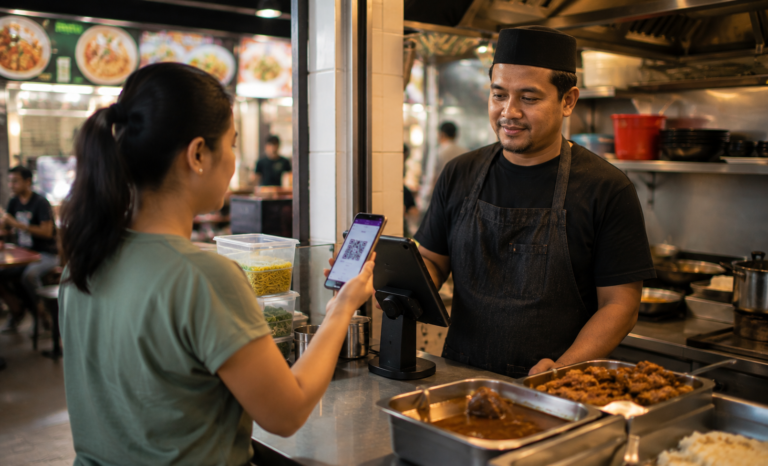
PayNow enables real-time bank transfers between customers and businesses, while SGQR allows merchants to accept multiple QR payment methods through a single QR code.
For F&B businesses, POS systems may also connect directly with kitchen workflows and QR ordering systems. Orders move from customer to kitchen in seconds, creating smoother coordination during busy lunch and dinner periods.
Cloud-based systems also give owners remote access to reports and inventory updates through mobile devices or laptops. That means business visibility continues even when owners are away from the physical store.
It is a little like having a live operational dashboard running quietly in the background throughout the day.
Learn more about how POS works
Traditional vs cloud-based POS: what is the difference?
Traditional POS systems mainly focus on on-site transactions, while cloud-based POS systems connect payments, reporting, inventory, and operations through online infrastructure that businesses can access from almost anywhere.
Older POS setups were typically installed on local servers with fixed cashier terminals. Software updates were handled manually, and expansion across outlets usually required additional hardware setup.
Cloud-based POS systems introduced a more flexible model.
Business data is stored securely online, updates happen automatically, and owners can access operational reports remotely. This became especially important as Singapore SMEs adopted digital payments, QR ordering, and multi-channel sales operations.
| Criteria | Cloud POS system | Traditional POS |
|---|---|---|
| Access | Remote access across devices | Mainly on-site |
| Software updates | Automatic | Manual |
| Payment integration | PayNow, SGQR, wallets ready | Depends on setup |
| Scalability | Easier multi-outlet expansion | Additional hardware required |
| Reporting | Real-time cloud reporting | Usually local reporting |
| Maintenance | Vendor-managed | Technician or in-house support |
For growing SMEs, cloud POS systems often provide stronger flexibility because operations are no longer tied to a single cashier terminal.
That flexibility matters for businesses managing multiple outlets, online orders, or fast-moving inventory.
Learn more about the different Cloud POS vs Traditional POS
The features that matter most for Singapore SMEs
The best POS system for a small business is not necessarily the one with the longest feature list. It is the one that fits naturally into the way the business operates every day. For Singapore SMEs, several capabilities consistently stand out because they support customer expectations, operational visibility, and future growth.
Local payment integration
A checkout experience in Singapore looks very different today compared to just a few years ago. Customers often move seamlessly between PayNow, SGQR, NETS QR, cards, and digital wallets depending on the situation.
That is why local payment integration should sit near the top of any POS evaluation checklist. A system that supports Singapore’s most common payment methods helps create a smoother customer experience while keeping transaction records centralised in one platform.
For businesses with high transaction volume, even a few seconds saved during checkout can add up across hundreds of transactions each week.
Inventory visibility
Inventory is more than a stock count. It is often one of the clearest indicators of how efficiently a business is operating.
Retailers want visibility into fast-moving products. F&B operators want a clearer view of ingredient consumption. Businesses with multiple outlets want confidence that inventory data remains consistent across locations.
A connected POS system helps transform inventory from a periodic administrative task into a real-time operational tool.
Reporting that supports decisions
Good reporting does more than show yesterday’s sales.
Business owners often want answers to practical questions such as:
- Which products generate the most revenue?
- Which hours are busiest?
- Which outlet is performing best?
- Which promotions are creating results?
Modern cloud POS systems help answer these questions quickly, allowing owners and managers to make decisions using live business data instead of waiting for end-of-month reports.
Cloud access and multi-outlet management
Many Singapore SMEs start with a single location and gradually expand into additional outlets, pop-up stores, or online sales channels.
Cloud-based POS systems make that transition easier because business information stays connected across locations. Owners can review reports remotely, compare outlet performance, and maintain visibility across operations from a single dashboard.
For growing businesses, this often becomes one of the most valuable features over time.
GST and business compliance support
As businesses grow, financial reporting becomes increasingly important.
A POS system that supports GST-ready reporting and integrates smoothly with accounting workflows can help create cleaner records and more efficient reporting processes. Businesses exploring IRAS InvoiceNow adoption may also benefit from systems that connect with invoicing and accounting tools as part of a broader digital workflow.
The strongest POS systems rarely stand out because of a single feature. Their value comes from how well they bring payments, inventory, reporting, and operations together into one connected experience.
What to look for when choosing a POS system in Singapore?
Choosing the right POS system becomes easier when SMEs evaluate operational fit instead of focusing purely on pricing. A system that matches the business workflow creates smoother adoption and stronger long-term value.
Start with ease of use.
Frontline staff should be able to navigate the interface comfortably during busy operating hours. A clean, intuitive layout helps teams process transactions efficiently and shortens onboarding time for new employees.
Next, evaluate local payment support.
A modern POS system should support the payment methods Singapore customers already use daily, including PayNow, SGQR, NETS QR, cards, and mobile wallets. This ensures checkout experiences remain consistent with customer expectations.
Cloud accessibility is another important consideration.
Owners increasingly want visibility beyond the physical store. Being able to review reports, inventory levels, and sales performance remotely can make day-to-day management significantly easier.
Support quality also deserves attention.
Look at onboarding assistance, training resources, response times, and local customer support availability. A reliable support experience often becomes especially valuable during implementation and business expansion.
Finally, evaluate how the system integrates with other tools such as accounting software, inventory systems, customer databases, and invoicing workflows.
The best POS system is rarely the one with the most features. It is the one that fits naturally into how your business operates today while supporting where you want to go tomorrow.
How different industries use POS differently
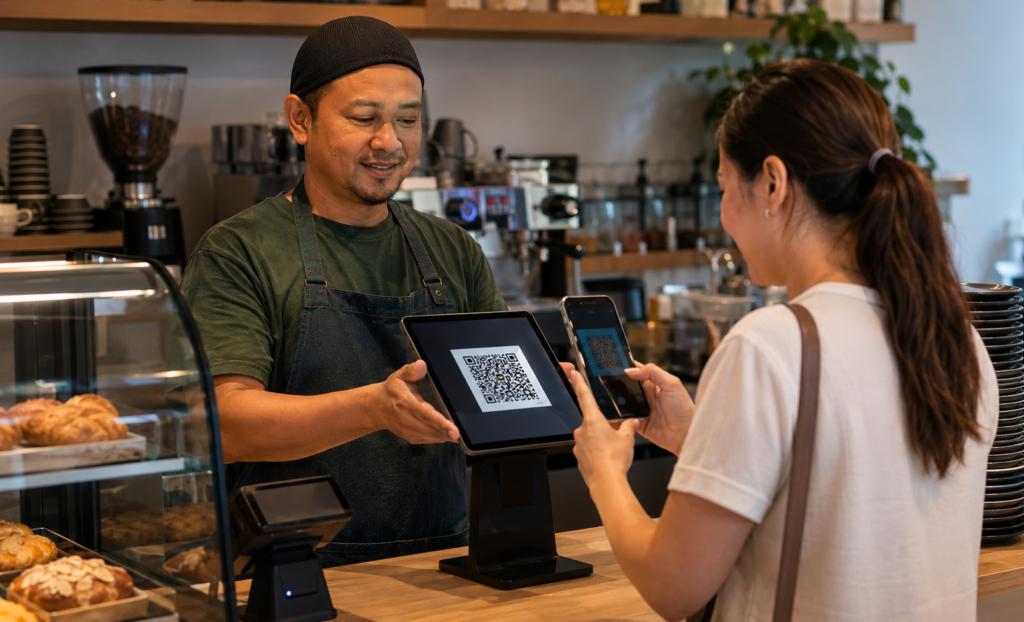
Different industries use POS systems in different ways, though the overall goal remains similar: creating smoother operations, better visibility, and stronger customer experiences.
For F&B businesses, speed and coordination often matter just as much as payment processing. During Singapore’s lunch rush, orders can arrive from walk-in customers, QR ordering systems, and delivery platforms within minutes of each other. A connected POS system helps bring those orders into one workflow while giving managers visibility into sales trends and ingredient movement throughout the day.
Retail businesses often focus heavily on inventory visibility. A POS system helps track fast-moving products, seasonal demand patterns, and stock levels across outlets. This allows teams to make faster replenishment decisions and maintain stronger product availability throughout the year.
Service businesses such as salons, wellness centres, and fitness studios often prioritise customer relationships. POS systems can support appointment scheduling, customer profiles, package tracking, and membership programmes, helping teams deliver a more consistent customer experience.
Some small manufacturers also integrate POS systems into showroom sales or direct-to-customer operations, especially when inventory management and order coordination need to stay connected.
That flexibility is one reason cloud POS systems continue expanding across industries in Singapore.
Getting started with the right POS for your business
A good POS system supports much more than transactions. It helps businesses manage payments, inventory, reporting, customer activity, and operational visibility from one connected platform.
As Singapore SMEs continue adopting digital payments and cloud-based workflows, POS systems are becoming increasingly central to how businesses grow efficiently and confidently.
The right POS system often starts as a way to process transactions, but its long-term value comes from helping businesses operate with greater clarity every day. From inventory visibility to sales reporting and payment management, a connected POS system creates a stronger foundation for growth.
Labamu is one example of a cloud POS system built for Singapore SMEs, supporting F&B, retail, and service businesses through connected tools designed for everyday operations. If you are exploring a modern POS platform that grows alongside your business, learn more about Labamu and see how it supports businesses across Singapore.